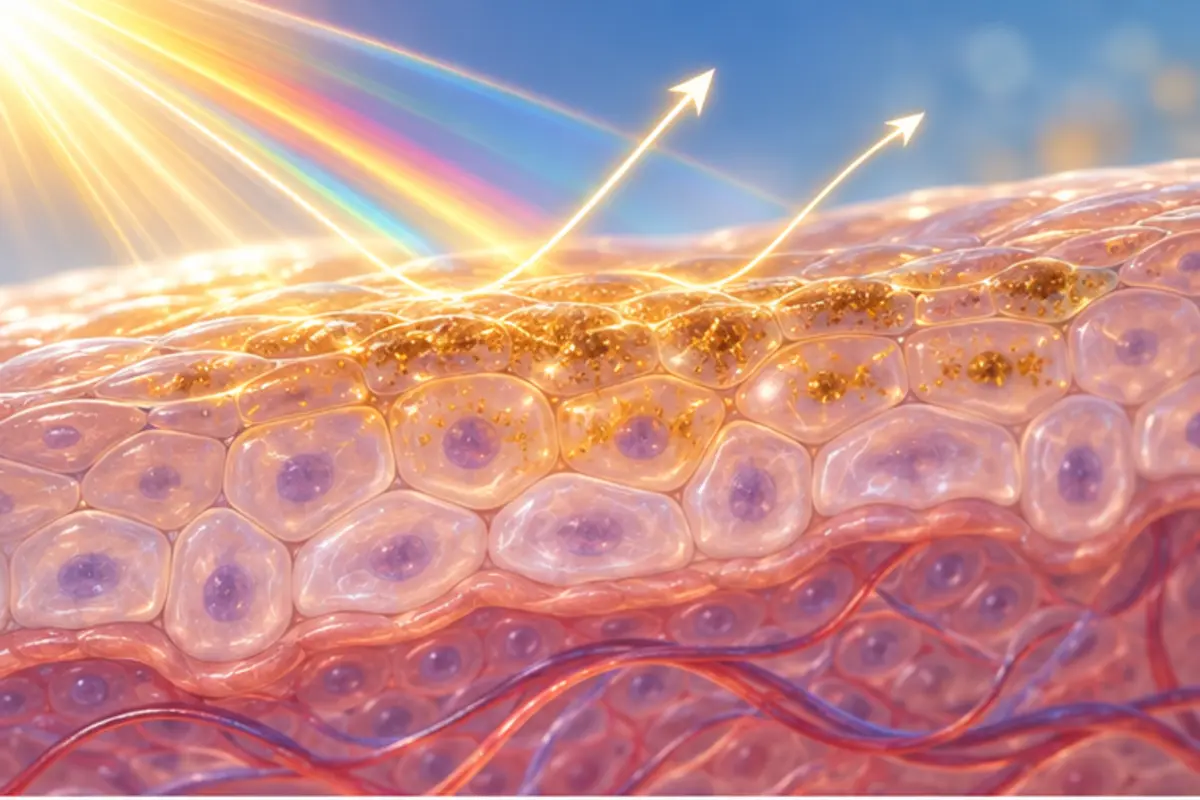
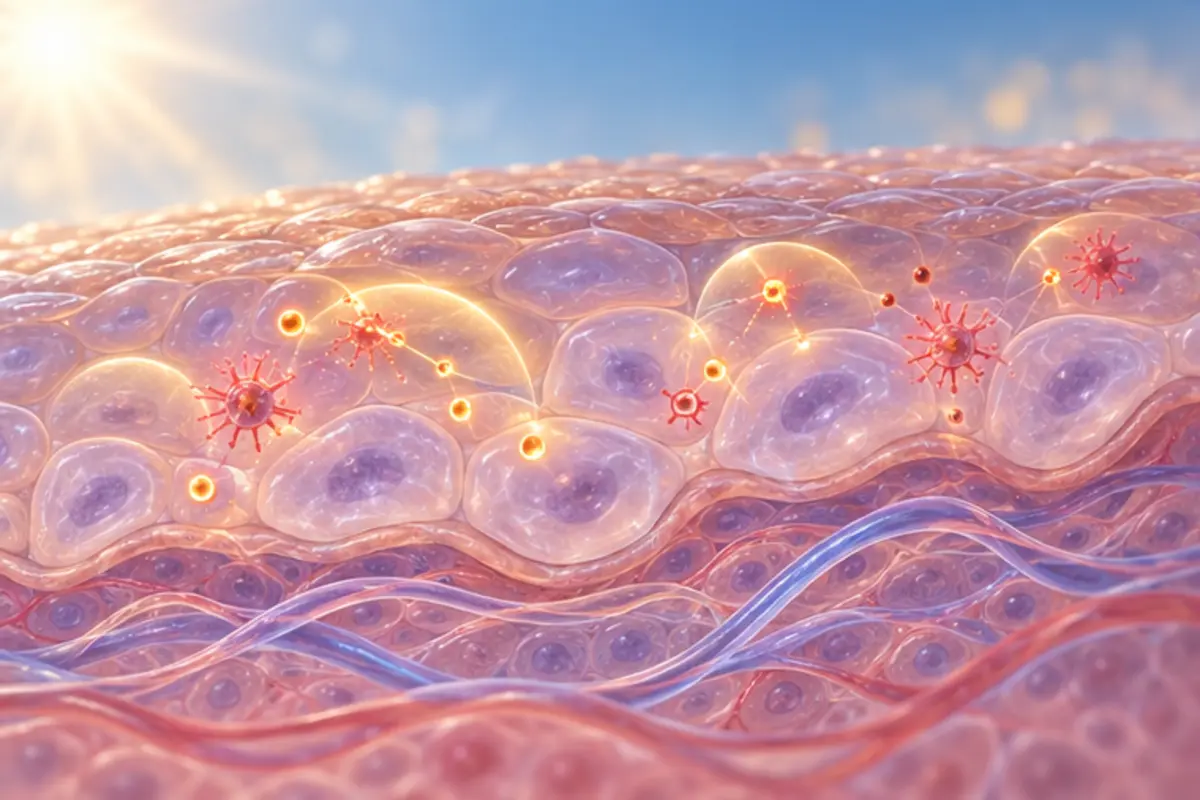
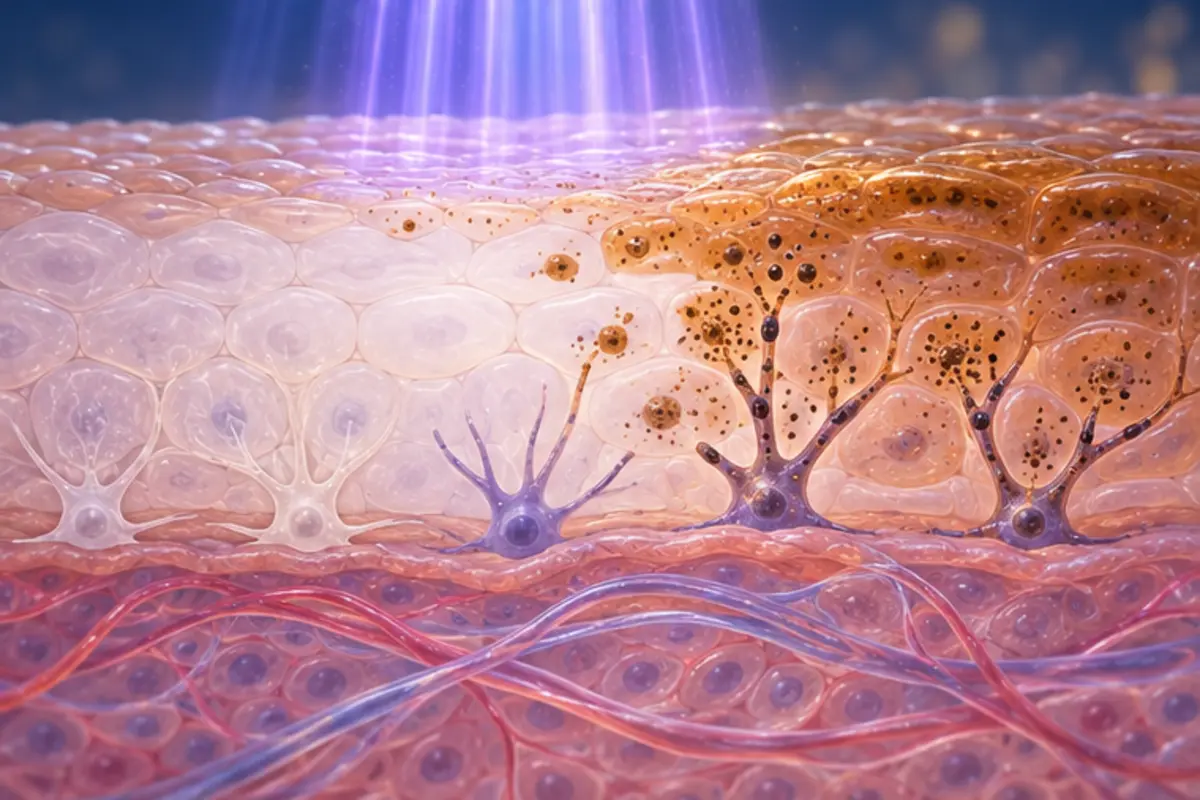
A specialist medicine that increases skin pigmentation and helps people with EPP spend longer in light with less pain.
EPP photoprotectionMC1R signallingEumelanin
An approved peptide medicine with a narrow, specialist indicationAfamelanotide has randomized human efficacy data and regulatory approval for adult EPP. That evidence does not validate cosmetic tanning, unapproved powders or self-injection.
Explore Afamelanotide
WHY PEOPLE ARE INTERESTED
Where does Afamelanotide have credible benefit?
Afamelanotide is different from unapproved tanning peptides: it is a regulated implant with controlled EPP trials, specialist administration and a defined monitoring framework. Off-label pigmentation research must remain separate.
Start with the big picture
These cards show what Afamelanotide is best known for and where the interest comes from. When you want the detail, open Research for the studies or Evidence for a quick view of how strong the support is.
The main reasons this compound attracts attention. The Research and Evidence sections give you the deeper scientific picture.
EPP photoprotection
Adults with erythropoietic protoporphyria experience painful phototoxic reactions to visible light.
WHAT THE RESEARCH SAYS
Randomized trials and regulatory reviews found that afamelanotide increased pain-free light exposure, although the benefit is meaningful rather than curative.
Evidence so farEstablished human efficacy in EPP
MC1R and eumelanin
Afamelanotide activates melanocortin-1 receptors and increases protective eumelanin production.
WHAT THE RESEARCH SAYS
The mechanism explains pigmentation and photoprotection but does not make UV exposure harmless or remove the need for sun and light precautions.
Evidence so farEstablished mechanism
More pain-free daylight
The practical EPP goal is greater freedom for daily activity rather than simply darker skin.
WHAT THE RESEARCH SAYS
In an EMA-reviewed study, participants receiving afamelanotide spent more pain-free time in direct sunlight over six months than those receiving placebo.
Evidence so farRegulatory-reviewed human benefit
Vitiligo repigmentation research
A small randomized study combined four monthly implants with narrowband UV-B phototherapy.
WHAT THE RESEARCH SAYS
The combination produced faster and greater repigmentation than NB-UVB alone, but vitiligo remains an unapproved indication and requires dermatology oversight.
Evidence so farPromising off-label human evidence
Interest first. Evidence next.We start with why people are talking about Afamelanotide, then show what the research actually supports so you can see the full picture.
HOW TO READ THE RESEARCH STORY
A melanocortin mechanism translated into measurable EPP benefit
Afamelanotide is a useful counterexample to unapproved tanning peptides: a defined implant, randomized trials, a narrow indication and continuing specialist monitoring.
SCENESSE 16 mg
01MC1R activation
Long-acting alpha-MSH analogue
→
02Eumelanin
Pigment production and photoprotection
→
03EPP trials
Pain-free light exposure tested in adults
→
04Approved use
Specialist implant—not cosmetic self-use
WHAT APPROVED CLINICAL USE LOOKS LIKE
Photoprotection measured through life in daylight—not a tanning claim
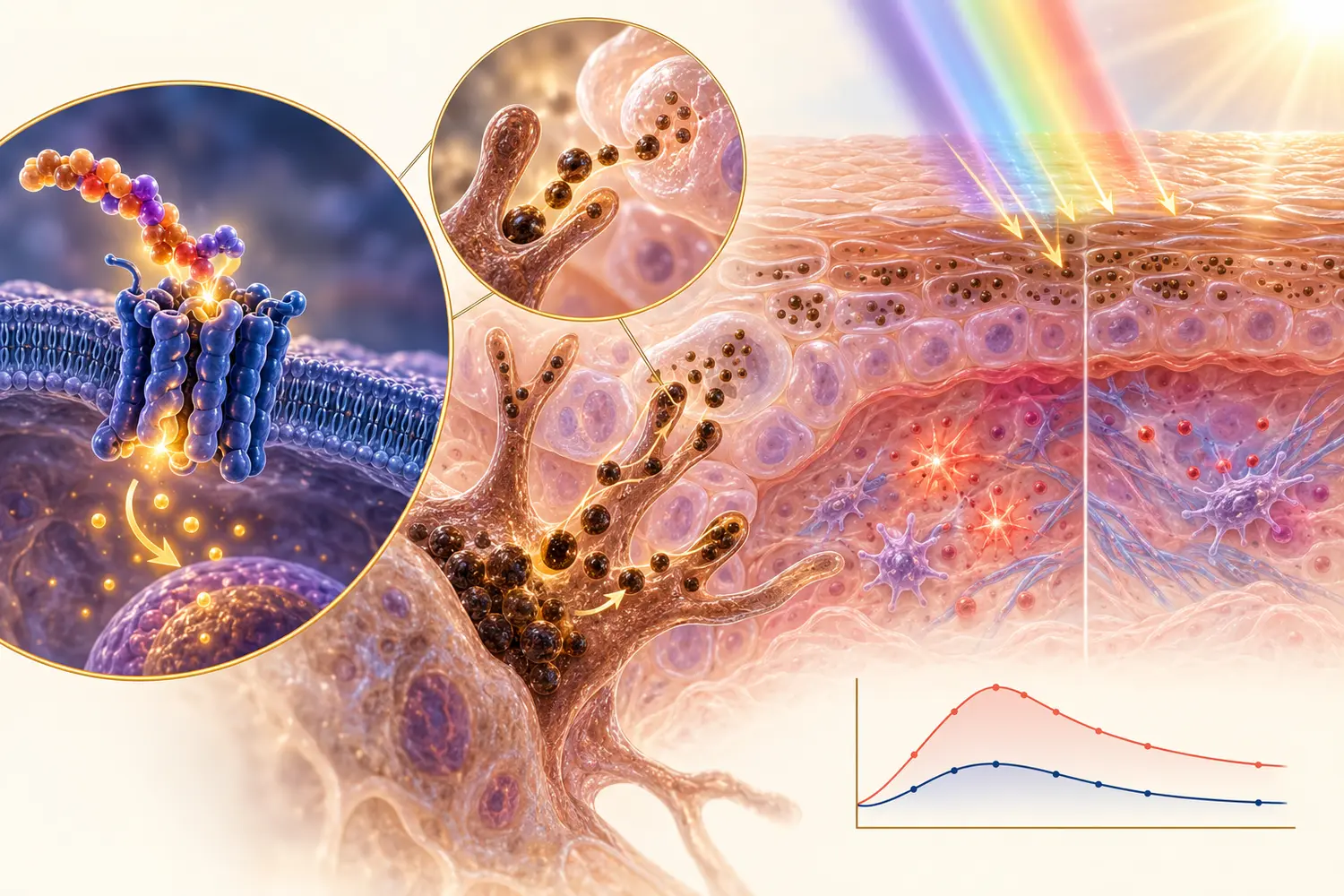
Afamelanotide activates MC1R and increases eumelanin, but its established benefit is specific: more pain-free light exposure for adults with EPP using a specialist-administered implant.
01
Mechanism
A long-acting alpha-MSH analogue activates melanocortin-1 receptors and increases eumelanin.
02
Clinical outcome
Trials measured pain-free light exposure and disease-specific quality of life in EPP.
03
Delivery
The authorised product is a bioresorbable implant placed every two months by trained professionals.
04
Boundary
Approval for adult EPP does not validate cosmetic tanning or unregulated injectable products.
RESEARCH LANDSCAPEMC1R · eumelanin · EPP · specialist implant
SCENESSE16 mg implantEPPSkin monitoring
Studies & trials
Studies & trials
Original publication · PubMed · trial registry where available
Randomized EPP trials and continuing clinical use provide substantial human evidence.
✓
Clinical efficacyExtensive
5/5 evidence depth
Pain-free light exposure in adults with EPP is an established, regulator-reviewed benefit.
◇
Safety evidenceStrong
4/5 evidence depth
Clinical safety and monitoring information exist, though long-term surveillance and specialist administration remain important.
⌁
Preclinical evidenceStrong
4/5 evidence depth
Melanocortin, pigmentation and photoprotection mechanisms are supported by extensive laboratory and translational research.
HOW TO READ THESE SCORESStrong preclinical evidence · extensive human evidence
These are editorial evidence-depth ratings on a 1–5 scale, not a statistical result or a single scientific formula. They summarise how much relevant evidence is present in each separate category and how mature that evidence is.
Human evidenceHow much direct research in people is available and how developed it is.
Clinical efficacyWhether human studies demonstrate meaningful outcomes for the claims being discussed.
Safety evidenceHow much human safety, tolerability and longer-term follow-up information is available.
Preclinical evidenceThe depth of laboratory and animal research supporting biological plausibility.
Evidence does not validate tanning powders or injections
Keep route, study setting and outcome together
A measured biological response can be valuable evidence without establishing a self-administered protocol or a durable treatment benefit.
From promising signals to human evidencePreclinical research can reveal promising biological signals. Human studies show how far those signals have translated into real-world outcomes.
What people are exploring
PEOPLE & EXPERIENCE
Why people are exploring Afamelanotide
EPP freedom, photoprotection, repigmentation and cosmetic interest—separated by indication so approved evidence is not transferred to unregulated tanning use.
Afamelanotide attracts interest in EPP, photoprotection, vitiligo and pigmentation. Its approved implant evidence is valuable precisely because it should not be blurred with unapproved tanning injections or internet powders.
Experiences can reveal recurring goals, perceived changes and practical questions that formal studies may not yet address. They can suggest what deserves investigation, but cannot isolate the effect of one compound from rehabilitation, time or other changes.
+
⌁WHAT RESEARCH ADDSScientific context
Human and preclinical research helps test whether an idea is biologically plausible, whether it appears in people and how confidently the result can be separated from chance, bias or other parts of recovery.
01Frequently discussed
Frequently discussedPositive interest with important uncertainty
Living more freely with EPP
People with EPP value ordinary daylight activities that can otherwise trigger severe pain.
HUMAN EVIDENCE
Randomized trials and regulatory review show increased pain-free light exposure in adults with EPP.
Do not transfer the approved EPP evidence to unregulated tanning products.
◇
Experience can start the question. Research has to test it.
Community reports can surface patterns worth exploring. Controlled human research is what tests whether those patterns are reliable, clinically meaningful and attributable toAfamelanotide, while the available studies show how far that question has already been answered.
Dose & duration
DOSE & DURATION
See the numbers in their proper context
Compare published study protocols with the patterns people discuss in the community. The two are intentionally kept separate so an anecdotal routine is never mistaken for clinical guidance.
Research protocols · community patterns · calculator tools
Research dose ≠ recommendation. A dose used in a study describes that study only and does not establish an appropriate dose for an individual outside the research setting.
ONE ANECDOTAL COMMUNITY EXAMPLE
A fixed implant schedule—there is no titration
The authorised product is a 16 mg bioresorbable implant placed by trained healthcare professionals for adults with EPP.
ANECDOTAL · UNVALIDATED
1Before higher light
16 mg implant
Confirm EPP, suitability and skin baseline
2Two months later
16 mg implant
Repeat only within specialist care
3Two months later
16 mg implant
Typical third EU seasonal implant
4Clinical review
Continue or stop
EU maximum is four implants per year
What the authorised schedule describesOne 16 mg subcutaneous implant every two months; EU guidance usually recommends three per year and no more than four.
What it does not validateThere is no approved cosmetic-tanning injection, powder conversion, self-implantation method or dose escalation.
◎
ROUTE & DELIVERYAn implant is not an injectable vial
SCENESSE is a sterile, bioresorbable rod inserted subcutaneously by a trained professional. Milligram comparisons with unregulated tanning products are inappropriate.
PROFESSIONAL SOURCE CONTEXT
The source provides the authorised EPP indication, fixed implant amount, interval and monitoring requirements.
EU guidance places treatment in designated specialist centres and recommends observation after implantation.
↗
HOW TO READ THE STEP-UPThe start and target come from the published protocol.
The visual shows the opening amount, target amount and total study window. It does not invent intermediate steps: the linked paper or authorised product information remains the source for the complete escalation schedule.
Often combined with
OFTEN COMBINED WITH
Why people explore pairings with Afamelanotide
See the thinking behind community-named stacks, the different role each component is proposed to play, and how much of that idea has actually been tested as a combination.
Community rationale · component roles · evidence boundary
Potential first, evidence in context. Pairings are usually explored because their research stories appear complementary. That makes them interesting to study, but does not yet prove extra benefit or safety.
CURRENT COMPOUNDAfamelanotide
→
OFTEN EXPLORED WITHAfamelanotide + EPP light protection
Afamelanotide implant + Protective clothing, shade and planned exposure
→
OFTEN EXPLORED WITHAfamelanotide + narrowband UV-B
Combination-specific human research is the strongest evidence for what a pairing adds. Evidence for either ingredient alone should not be silently transferred to the combination.
AAFAMELANOTIDE IS USUALLY DISCUSSED AROUNDApproved MC1R-driven photoprotection for adult EPP
The evidence supports a specialist 16 mg implant, continued light protection and skin monitoring—not general tanning use.
+
PTHE PAIRED APPROACH MAY ADDPractical EPP protection or dermatologist-controlled NB-UVB
Light precautions belong to approved care; NB-UVB combination evidence is limited to a small off-label vitiligo trial.
EPP photoprotection, vitiligo treatment and cosmetic tanning have different evidence and risk–benefit balances.
02Do not substitute Melanotan products
Unapproved powders and injections are not equivalent to the regulated implant.
03Build in skin surveillance
Pigment changes require baseline and follow-up full-body examination.
Safety context
◇
SAFETY & UNCERTAINTY
Approved does not mean appropriate for cosmetic or unsupervised use
01ENCOURAGING CONTEXTBenefit is established for adult EPP
Randomized trials and regulatory review support increased pain-free light exposure using the approved implant.
02THE IMPORTANT BOUNDARYThe indication is not cosmetic tanning
A specialist 16 mg implant cannot validate unapproved powder, self-injection or Melanotan products.
03WHAT STILL NEEDS MONITORINGPigment lesions and individual suitability
Skin changes, implant reactions, medicines, pregnancy and liver or kidney status require professional review.
What the current evidence saysImplant-site reactions, nausea, headache and skin darkening can occur. Existing and new pigment lesions require monitoring, light protection must continue, and treatment belongs with trained specialist teams. Reduced liver or kidney function is a restriction in European product information; pregnancy, anticoagulants and individual suitability require clinician review.
01 · OBSERVEDPublished safety findings
The summary above reflects the human or preclinical evidence currently represented on this profile.
02 · UNCERTAINGaps still matter
Limited follow-up, small studies or absent controlled trials can leave uncommon and longer-term risks unresolved.
03 · CONTEXTProduct and regulatory status
Route, product identity, quality and regulatory status can materially change the safety context; see the linked status sources below.
SKIN SURVEILLANCEUse baseline and twice-yearly examination
Darkening of existing moles and freckles can occur; new or changing pigmented lesions need review.
LIGHT PROTECTIONDo not abandon practical precautions
Protective clothing, shade and EPP light-management measures remain necessary during treatment.
SPECIALIST IMPLANTDo not improvise the route
The approved bioresorbable rod is inserted by trained professionals and is not equivalent to a vial or tanning injection.
Authorised for adults with EPP under exceptional circumstances
SCENESSE is a 16 mg implant administered in designated specialist centres to increase pain-free light exposure. Current product information and national availability should be checked.
The approved indication is increased pain-free light exposure in adults with a history of phototoxic reactions from EPP. The implant is administered by a trained healthcare professional.
Confirm current access with a specialist porphyria service
EU authorisation does not by itself describe current UK commissioning or access. Check the MHRA products database and a UK porphyria specialist rather than assuming availability.