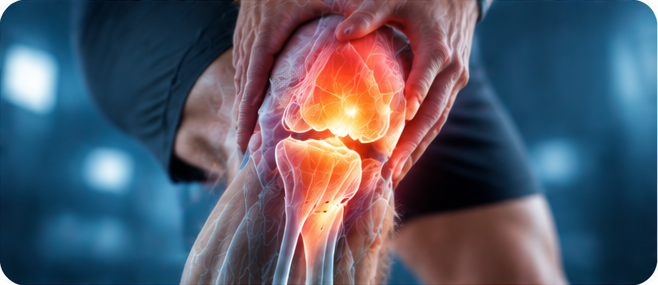
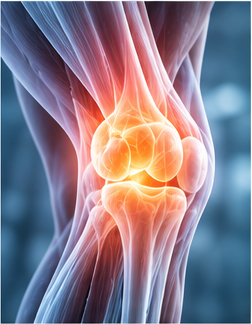
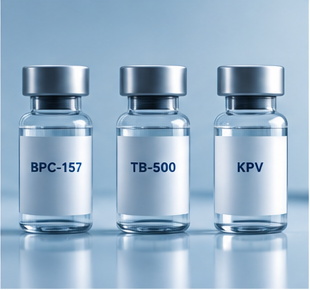
Best known for the interest around injury recovery, tissue healing, joints and gut support, BPC-157 remains a research peptide with evidence still led by laboratory and animal studies.
Tendon & ligamentMuscle recoveryJoint mobility
Explore BPC-157
WHY PEOPLE ARE INTERESTED
Why are people interested in BPC-157?
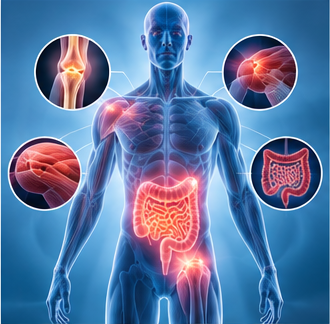
BPC-157 has built a strong following around recovery, soft-tissue healing, joint and gut support. These are the areas creating the most interest; the research behind them is explored in more detail below.
Start with the big picture
These cards show what BPC-157 is best known for and where the interest comes from. When you want the detail, open Research for the studies or Evidence for a quick view of how strong the support is.
Tendon and ligament repair is one of the strongest areas of interest around BPC-157, particularly for injuries that can be slow and difficult to recover from.
Animal studies have reported improved tendon and ligament healing, tissue organisation and functional recovery across several experimental injury models.
Evidence so farPromising preclinical evidence
Muscle & soft-tissue recovery
BPC-157 is widely discussed for its potential to support muscle and soft-tissue recovery following injury, strain or demanding physical activity.
In a small retrospective knee-pain study, 11 of 12 people receiving BPC-157 alone reported significant improvement. The study was uncontrolled and did not use validated outcome measures.
Evidence so farEarly human observations
Gut support & tissue protection
Gastrointestinal protection is one of the longest-standing research themes surrounding BPC-157 and remains an important part of its broader recovery story.
Experimental studies have explored gastric and intestinal mucosal protection, ulcer healing, inflammatory injury and restoration of gastrointestinal tissue.
Evidence so farStrong preclinical interest
Inflammation & repair pathways
Another reason BPC-157 attracts interest is its potential influence on biological processes that help coordinate circulation, inflammation and tissue repair.
Laboratory and animal research has explored angiogenesis, nitric-oxide signalling, fibroblast activity, collagen-related processes and inflammatory pathways.
Evidence so farMechanistic & preclinical evidence
Broader tissue-repair potential
BPC-157 stands out because research interest is not confined to a single tissue type, giving it a broader recovery profile than many experimental peptides.
The preclinical literature spans tendon, ligament, skeletal muscle, bone, gastrointestinal tissue and other injury models, although these findings still require clinical confirmation.
Evidence so farBroad preclinical signal
Interest first. Evidence next.We start with why people are talking about BPC-157, then show what the research actually supports so you can see the full picture.
WHERE THE POTENTIAL COULD LEAD
The next questions could turn early promise into useful answers
BPC-157 attracts interest because research points towards several possible benefits. Better human studies could show which effects are meaningful, how they might translate into practice and where the greatest potential really lies.
01
Meaningful recovery outcomes
The biggest opportunity is to discover whether the repair signals seen in experimental research can lead to better movement, comfort and return to activity for people.
02
Clearer ways to explore it
Better information on dose, route and duration could show which approaches deserve further study and help separate promising possibilities from guesswork.
03
Confidence alongside potential
Larger and longer studies could build a clearer safety picture, helping people understand where the potential may justify further research and where added caution is needed.
Studies & trials
Studies & trials
Original publication · PubMed · trial registry where available
WHAT RESEARCH IS EXPLORING
A recovery story that spans more than one tissue
Part of BPC-157's appeal is the breadth of research interest around it. Experimental work has explored connective tissue, muscle, gastrointestinal protection and biological processes involved in repair.
01
Tendon & ligament
Healing, tissue organisation and recovery after experimental connective-tissue injury.
02
Muscle & soft tissue
Repair processes and functional recovery following experimental muscle injury.
03
Gastrointestinal tissue
Mucosal protection, tissue restoration and healing in gastrointestinal models.
04
Repair signalling
Circulation, angiogenesis, inflammatory signalling and other repair-related pathways.
RESEARCH LANDSCAPERepair · protection · recovery
Connective tissueMuscleGutRepair pathways
HUMAN RESEARCH & TRIAL PIPELINE
What has been explored in people?
The published human literature remains small, but it now sits alongside the first registered randomised Phase 2 study. Published findings and a trial that has not reported results are shown separately below.
PUBLISHED HUMAN EVIDENCEThree small uncontrolled reports
A retrospective chart review described outcomes after intra-articular BPC-157 for knee pain. It provides an early human signal, but had no randomisation, control group, blinding or validated functional outcome measure.
A 12-person pilot reported symptom outcomes after a single cystoscopic procedure. The signal is interesting, but the small sample, subjective response measure and lack of a comparator prevent a reliable efficacy conclusion.
A two-person intravenous pilot contributed short-term tolerability and pharmacokinetic observations. Its three-day observation window and sample size cannot characterise uncommon effects or establish general safety.
REGISTERED CONTROLLED STUDYRecruiting · no results posted
PHASE 2 · NCT07437547
BPC-157 for acute hamstring muscle-strain repair
A randomised, double-blind, placebo-controlled study plans to enrol 120 participants with MRI-confirmed grade II hamstring strain. It is testing 14 days of subcutaneous BPC-157 alongside standardised rehabilitation, with return to sport and MRI injury volume as the co-primary outcomes.
What this evidence stage meansThe published reports can identify signals worth testing. The recruiting Phase 2 study is the first controlled step toward answering an efficacy question, but its registration is not evidence that BPC-157 works and no trial result is available yet.
Evidence snapshot
Evidence snapshot
Separate dimensions, not one overall score
◎
Human evidenceEarly
1/5 evidence depth
Published human evidence is extremely limited relative to the preclinical literature.
✓
Clinical efficacyEarly
1/5 evidence depth
This score reflects completed human outcome evidence. A registered or recruiting trial does not count until results are reported.
◇
Safety evidenceEarly
1/5 evidence depth
FDA has stated that safety-related information for proposed routes is limited and has raised concerns around immunogenicity and peptide-related impurities.
⌁
Preclinical evidenceStrong
4/5 evidence depth
A large preclinical literature reports biological activity across multiple models, but this cannot be used to inflate the human-evidence score.
HOW TO READ THESE SCORESStrong preclinical evidence · early human evidence
These are editorial evidence-depth ratings on a 1–5 scale, not a statistical result or a single scientific formula. They summarise how much relevant evidence is present in each separate category and how mature that evidence is.
Human evidenceHow much direct research in people is available and how developed it is.
Clinical efficacyWhether human studies demonstrate meaningful outcomes for the claims being discussed.
Safety evidenceHow much human safety, tolerability and longer-term follow-up information is available.
Preclinical evidenceThe depth of laboratory and animal research supporting biological plausibility.
BPC-157 EVIDENCE LANDSCAPE
Promising biology, early human translation
BPC-157 attracts interest because experimental research spans several repair-related systems. The visual below shows where that signal is strongest—and where human confirmation is still missing.
CURRENT MATURITYEarly human evidencePotential worth following · first controlled trial now recruiting
01
Preclinical researchBroad signal base
Repair, inflammation, vascular and gastrointestinal models
02
Early human evidence3 small reports
Fewer than 30 published participants in total
03
Controlled trial pipeline1 Phase 2 recruiting
120 participants planned for acute hamstring strain; no results posted
04
Clinical efficacyNo controlled results
Benefit has not yet been confirmed against placebo or standard care
WHY PEOPLE ARE INTERESTEDA wide potential benefit story
Tissue repair, tendon and ligament recovery, gut integrity and inflammatory signalling all appear in the research conversation.
WHAT WOULD MOVE CONFIDENCEWell-designed human trials
Randomised comparisons, larger samples, defined outcomes and longer follow-up would show which signals translate into meaningful benefit.
HOW THE EVIDENCE IS ORGANISED
BPC-157 research profile
Research themes are shown separately from the strength of the human evidence so biological interest is not confused with proven clinical benefit.
RESEARCH AREA 01Tendon & ligament
RESEARCH AREA 02Muscle recovery
RESEARCH AREA 03Joint mobility
RESEARCH AREA 04Gut support
Mechanistic and preclinical findings are context for further research; they are not treated as equivalent to demonstrated human outcomes.
From promising signals to human evidencePreclinical research can reveal promising biological signals. Human studies show how far those signals have translated into real-world outcomes.
What people are exploring
PEOPLE & EXPERIENCE
What people are exploring
The recurring goals, experiences and questions that drive interest in BPC-157 — shown alongside the research context behind them.
Community themes · research context · evidence boundaries
“
Why this matters
Community discussion concentrates on recovery from stubborn musculoskeletal problems, especially tendon, ligament, shoulder and knee issues. Gut symptoms, changes in pain and questions about injection location also recur. These reports show what people want answered, but they often overlap with rehabilitation, rest, surgery, changing activity and other compounds, so BPC-157's individual contribution cannot be isolated.
COMMUNITY SIGNAL MAP
Areas of interest at a glance
These are the themes that recur most clearly in the reviewed discussions. The signal lights show qualitative prominence in those discussions — they are not percentages or proof that a benefit occurs.
Experiences can reveal recurring goals, perceived changes and practical questions that formal studies may not yet address. They can suggest what deserves investigation, but cannot isolate the effect of one compound from rehabilitation, time or other changes.
+
⌁WHAT RESEARCH ADDSScientific context
Human and preclinical research helps test whether an idea is biologically plausible, whether it appears in people and how confidently the result can be separated from chance, bias or other parts of recovery.
AREA 01
Very frequently discussedMostly positive but mixed
Faster tendon / ligament recovery
People usually raise this theme in relation to persistent tendon problems, ligament sprains, post-surgical rehabilitation or a slow return to training. Reports commonly sit alongside rest, physiotherapy and altered loading, which makes it difficult to separate the effect of BPC-157 from the wider recovery plan.
HUMAN RESEARCH
No controlled human trial represented here has established faster tendon or ligament healing. The published human evidence covers small knee, bladder and intravenous reports rather than a dedicated tendon or ligament efficacy trial.
Animal models have explored tendon-to-bone healing, ligament repair and tissue organisation. These findings provide a biological rationale for further study, but they do not show that recovery is faster or more complete in people.
This is the strongest area of community interest and one of the clearest preclinical themes. It remains an open clinical question rather than an established human benefit.
AREA 02
Frequently discussedMostly positive but mixed
Reduced joint or injury pain
Discussions often focus on day-to-day comfort, range of movement and being able to resume exercise. Pain can also change because of rehabilitation, rest, time and expectation, and reduced pain does not necessarily mean that damaged tissue has healed more quickly.
HUMAN RESEARCH
A small retrospective knee-pain report described improvement after intra-articular BPC-157, but it had no control group, blinding or validated functional outcome measures. It can suggest a possible signal, not establish effectiveness.
Animal research includes inflammatory, vascular and tissue-repair pathways that could be relevant to symptoms. It cannot establish the size, reliability or duration of pain relief in people.
There is an early human observation worth following, but symptom relief and accelerated tissue repair should be treated as separate questions until controlled studies test both.
AREA 03
Commonly discussedMostly positive
Gut / gastrointestinal benefit
Gut-related discussion ranges from general digestive comfort to interest in the gut lining and recovery from gastrointestinal irritation. The breadth of these reports is important: different symptoms and conditions should not be treated as one outcome.
HUMAN RESEARCH
Adequate controlled human evidence for gastrointestinal benefit has not been established in the reviewed record. The small interstitial-cystitis pilot concerns the bladder and should not be presented as proof of a general gut effect.
A substantial experimental literature has explored gastrointestinal mucosal protection, ulcer and injury models, and repair-related pathways. Translation into clinically meaningful human outcomes remains uncertain.
Gut protection is a prominent and biologically interesting research theme, but the current evidence does not establish a broad gastrointestinal treatment effect in people.
AREA 04
Frequently debatedConflicting
Injecting close to an injury works better
The idea of injecting near an injury is popular because local delivery feels intuitive. Online accounts mix subcutaneous use near a painful area with very different routes used in small studies, so the discussions can blur distinct procedures and exposures.
HUMAN RESEARCH
Published reports use different routes for different research questions, including intra-articular, intravesical and intravenous administration. No meaningful head-to-head human study has shown that injecting close to an injury works better than another location.
Local experimental models and proposed systemic biological effects do not establish site-specific superiority. Evidence from one route or tissue cannot automatically be transferred to another.
Injection location remains a frequently debated community practice without comparative human evidence. The site of administration should not be presented as a proven way to improve recovery.
◇
Experience can start the question. Research has to test it.
Community reports can surface patterns worth exploring. Controlled human research is what tests whether those patterns are reliable, clinically meaningful and attributable toBPC-157, while the available studies show how far that question has already been answered.
Dose & duration
DOSE & DURATION
See the numbers in their proper context
Compare published study protocols with the patterns people discuss in the community. The two are intentionally kept separate so an anecdotal routine is never mistaken for clinical guidance.
Research protocols · community patterns · calculator tools
Research dose ≠ recommendation. A dose used in a study describes that study only and does not establish an appropriate dose for an individual outside the research setting.
FROM RESEARCH TO THE NUMBERSSee the protocol first, then do the maths
Start with the amount, timing, route and duration actually reported by a source. The calculator tools can convert the numbers without deciding what anyone should take.
ONE ANECDOTAL COMMUNITY EXAMPLE
What a start, step-up and stopping point can look like
This visual describes one reported pattern so the terminology is easier to understand. It is not a typical, validated or recommended BPC-157 protocol.
NOT CLINICAL GUIDANCE
1Day 1
250 mcg
Reported starting amount
2Day 2
375 mcg
Reported step-up
3Days 3–28
500 mcg / day
Reported continuation
4Week 5
Pause & review
Illustrative break point
What is reportedOne community account described 250 mcg on day one, 375 mcg on day two and 500 mcg per day from day three onward.
What is not establishedBPC-157 has no validated therapeutic dose, titration method, course length or break schedule. The week-five pause is an illustrative endpoint, not an evidence-based interval.
CALCULATOR TOOLS
Work with the numbers
Convert amounts, concentration, liquid volume and vial requirements. These tools do the arithmetic; they do not select a dose.
n=2; cannot establish a general safety or maintenance regimen.
↗
HOW TO READ THE STEP-UPThe start and target come from the published protocol.
The visual shows the opening amount, target amount and total study window. It does not invent intermediate steps: the linked paper or authorised product information remains the source for the complete escalation schedule.
COMMUNITY DISCUSSION
What people commonly discuss
Anecdotal / unvalidated
STARTING APPROACHES
Online communities discuss many different starting amounts and routes; there is no accepted clinical starting dose.
DURATION / CYCLES
Short 'cycles' are commonly discussed, often framed around injury recovery rather than chronic treatment.
MAINTENANCE DISCUSSION
Maintenance use is discussed online, but no clinically validated maintenance schedule has been identified.
Community patterns are anecdotal and unvalidated unless a linked human study independently supports the same approach.
COMMUNITY-REPORTED PRACTICEInjection patterns people commonly discussPopular uses · route · site discussion · timing · duration
Common anecdotal consensus
Tendon or soft-tissue recoveryJoint or muscle recoveryGut-related interest
ROUTE PEOPLE DISCUSS
Subcutaneous injection is the route most often discussed in peptide communities.
INJECTION-SITE DISCUSSION
People commonly discuss abdominal subcutaneous sites or injecting near the area of interest. There is no good human evidence that local injection makes BPC-157 work better at that location.
TIMING PEOPLE DISCUSS
Daily use is frequently discussed, with timing usually treated as less important than consistency.
DURATION / CYCLE DISCUSSION
Short multi-week cycles are commonly discussed, although there is no validated human treatment course.
What the evidence supports
These patterns come from community practice rather than established clinical guidance. Human evidence for injectable BPC-157 remains very limited.
Community reports describe what people say they do; they are not instructions, validated protocols, or evidence that a particular injection site or timing improves outcomes.
Often combined with
OFTEN COMBINED WITH
Why people explore pairings with BPC-157
See the thinking behind community-named stacks, the different role each component is proposed to play, and how much of that idea has actually been tested as a combination.
Community rationale · component roles · evidence boundary
Potential first, evidence in context. Pairings are usually explored because their research stories appear complementary. That makes them interesting to study, but does not yet prove extra benefit or safety.
CURRENT COMPOUNDBPC-157
→
COMMUNITY STACKWolverine Stack
BPC-157 + TB-500
→
OFTEN EXPLORED WITHBPC-157 + GHK-Cu
BPC-157 + GHK-Cu
Combination-specific human research is the strongest evidence for what a pairing adds. Evidence for either ingredient alone should not be silently transferred to the combination.
BBPC-157 IS USUALLY DISCUSSED AROUNDLocal tissue, tendon and gut repair signals
Its appeal comes from a broad preclinical repair story, with only early human translation so far.
+
PTHE PAIRED COMPOUND MAY ADDA different or broader biological angle
Community stacks often aim to combine local repair interest with mobility, skin, vascular or systemic recovery themes.
Different proposed roles can create a plausible, easy-to-understand recovery story.
02What carries across
Each component keeps its own evidence profile; a benefit seen alone remains evidence for that component.
03What still needs testing
Whether the combination is more effective—or introduces different risks—requires direct human comparison.
Safety context
SAFETY CONTEXT
Interest in potential benefit needs a clear safety frame
Early human exposure adds useful information, but the evidence base is not yet large or long enough to define a complete safety profile. The most helpful view is to separate what has been observed from what has not yet been measured well.
WHAT EARLY REPORTS ADDA starting point for human tolerability
Published exposure means the conversation is no longer based only on animal and laboratory models.
WHAT STILL NEEDS DEFININGFrequency, interactions and longer-term effects
Larger controlled studies and longer follow-up are needed before uncommon or delayed effects can be estimated reliably.
HUMAN SAFETY EVIDENCEUseful early observations, but still a small evidence base
EARLY STAGE
H
Human safety data
Early
Small published human reports provide useful first observations, but cannot yet define the full range or frequency of adverse effects.
LT
Longer-term use
Still developing
Current human studies do not yet show what repeated exposure, longer courses or repeated cycles mean over time.
Q
Product quality
Variable
With unapproved products, formulation, purity, sterility and even product identity can vary between sources.
R
Regulatory position
Investigational
BPC-157 remains an investigational compound rather than an approved medicine with a standard product label.
INJ
Route & injection risk
Route-dependent
Injection, sterility and administration introduce risks that are separate from the peptide's proposed biological effects.
RX
Interactions & conditions
Not characterised
Human data are too limited to define drug interactions or how underlying health conditions may change the risk profile.
EARLY SIGNALShort-term human observationsPresent, but based on very small numbers
STILL UNCLEARLong-term effects & interactionsNot characterised in adequate human studies
PRODUCT-DEPENDENTIdentity, purity & sterilityCannot be assumed for unapproved products
Why more human data mattersSmall early studies can identify useful signals. Larger and longer studies are what turn those signals into a safety picture people can use with confidence.
Sources & current status
READ FURTHER
Sources & current status
Follow the professional sources used across this profile, then see how the compound is currently described in regulatory and research terms.
This prototype does not identify a UK marketing authorisation for BPC-157. Production status should be checked against MHRA records at review time.
US
FDA review weighs against 503A Bulks List inclusion
FDA's 2026 PCAC briefing concludes that clinical safety information is insufficient and its balancing of criteria weighs against BPC-157 free base and acetate being placed on the 503A Bulks List.