Epitalon is best known in longevity research, where interest centres on ageing, sleep and cellular health. Human evidence remains limited.
Telomere biologyCircadian rhythmCell ageing
Laboratory-led evidence with limited clinical translationRecent cell-line work strengthens the telomere mechanism story, while claims of longer life or broad rejuvenation remain unsupported by robust modern human trials.
Explore Epitalon
WHY PEOPLE ARE INTERESTED
Why is Epitalon discussed in longevity research?
Epitalon's appeal comes from pineal biology, melatonin-related hypotheses and telomere research. These are meaningful scientific themes, but they do not yet establish a general anti-ageing treatment.
Start with the big picture
These cards show what Epitalon is best known for and where the interest comes from. When you want the detail, open Research for the studies or Evidence for a quick view of how strong the support is.
The main reasons this compound attracts attention. The Research and Evidence sections give you the deeper scientific picture.
Telomere & telomerase biology
Epitalon is best known for research on telomerase and telomere length.
WHAT THE RESEARCH SAYS
A 2025 cell-line study reported telomere extension through telomerase upregulation or ALT-related activity, including effects in cancer cell lines that require careful interpretation.
Evidence so farLaboratory evidence
Circadian & pineal signalling
The peptide is discussed around pineal regulation and melatonin rhythms.
WHAT THE RESEARCH SAYS
Most direct circadian evidence is preclinical or based on older regional studies rather than modern sleep trials.
Evidence so farEarly / mixed evidence
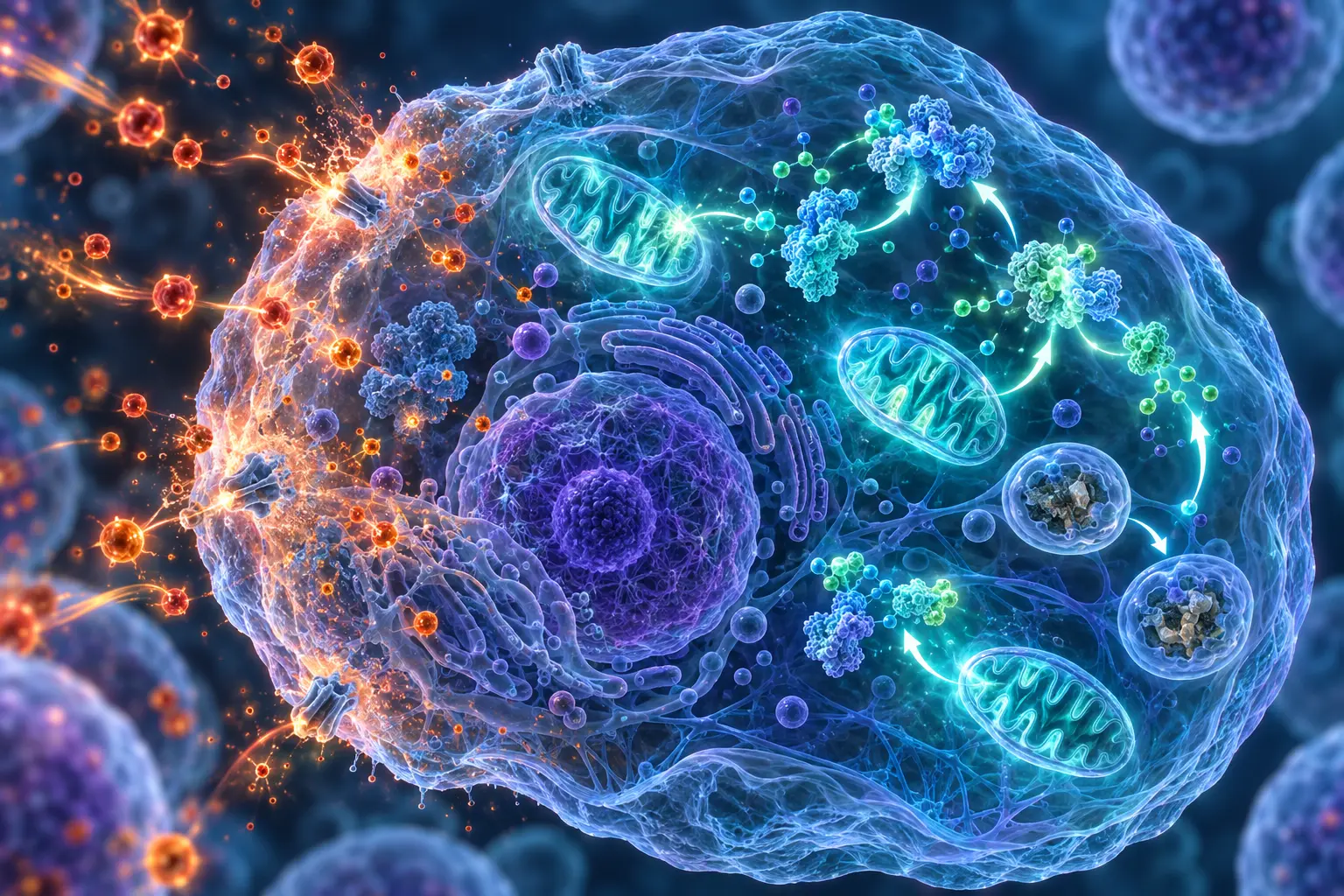
Cellular stress & ageing
Antioxidant and cell-maintenance mechanisms underpin broader healthy-ageing interest.
WHAT THE RESEARCH SAYS
In-vitro and animal studies report multiple signalling effects, but no validated healthspan endpoint in people.
Evidence so farPreclinical evidence
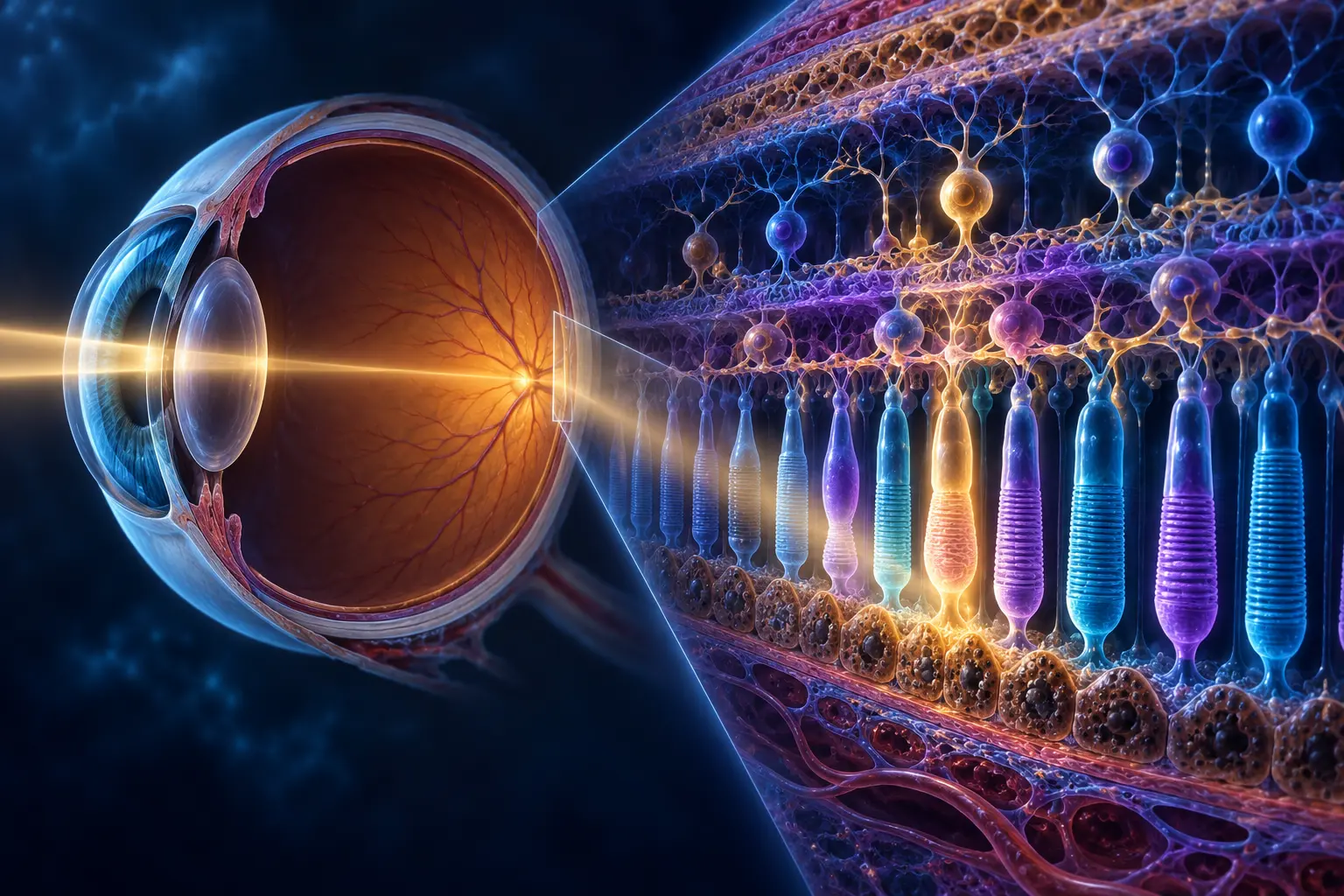
Retinal research
A small clinical literature has explored retinal degeneration.
WHAT THE RESEARCH SAYS
A 2002 report described clinical effects in retinitis pigmentosa, but modern controlled replication is lacking.
Evidence so farLimited human evidence
Interest first. Evidence next.We start with why people are talking about Epitalon, then show what the research actually supports so you can see the full picture.
HOW TO READ THE RESEARCH STORY
From pineal biology to a much bigger longevity claim
Epitalon's research story spans several distinct systems. The strongest way to read it is as a sequence of questions—not as one proven anti-ageing effect.
AEDG
01Pineal signal
Circadian and melatonin-related biology
→
02Cell response
Stress, gene-expression and antioxidant hypotheses
→
03Telomere finding
Recent laboratory evidence in cultured cells
→
04Human outcome
Longevity, sleep and healthspan still unproven
WHAT RESEARCH IS EXPLORING
Pineal signalling, telomere biology and a wide translation gap
Epitalon connects a small pineal tetrapeptide with circadian, retinal and cellular-ageing research. The breadth is scientifically interesting, but each theme has a different evidence level and none establishes general human longevity.
01
Pineal biology
Melatonin and light–dark signalling underpin the sleep and circadian hypothesis.
02
Cellular ageing
Laboratory work explores stress responses, gene expression and telomere maintenance.
03
Retinal signal
An older regional clinical report is relevant, but has not been followed by a modern trial programme.
04
Longevity boundary
No controlled trial has shown longer life, improved healthspan or broad rejuvenation in people.
RESEARCH LANDSCAPEPineal biology · telomeres · human boundary
Circadian signalsTelomeraseCell stressRetinal research
Studies & trials
Studies & trials
Original publication · PubMed · trial registry where available
Small, older or region-specific human reports exist, without a robust modern trial programme.
✓
Clinical efficacyEarly
1/5 evidence depth
No trial establishes general anti-ageing, sleep or longevity efficacy.
◇
Safety evidenceEarly
1/5 evidence depth
Long-term systemic safety and cancer-relevant telomere effects remain uncertain.
⌁
Preclinical evidenceDeveloping
3/5 evidence depth
Cell and animal studies support telomerase, circadian and stress-response hypotheses.
HOW TO READ THESE SCORESDeveloping preclinical evidence · early human evidence
These are editorial evidence-depth ratings on a 1–5 scale, not a statistical result or a single scientific formula. They summarise how much relevant evidence is present in each separate category and how mature that evidence is.
Human evidenceHow much direct research in people is available and how developed it is.
Clinical efficacyWhether human studies demonstrate meaningful outcomes for the claims being discussed.
Safety evidenceHow much human safety, tolerability and longer-term follow-up information is available.
Preclinical evidenceThe depth of laboratory and animal research supporting biological plausibility.
EVIDENCE LANDSCAPEEpitalonMechanism → translation → human outcome
Human efficacyEarly
Small, older regional reports; no modern longevity programme
MechanismActive
Cell and animal work across telomeres and pineal signalling
Main gapLarge
Human pharmacology, replication and long-term safety
What this snapshot does—and does not—show
It separates biological plausibility from demonstrated benefit. A compelling mechanism can justify better trials; it cannot substitute for them.
From promising signals to human evidencePreclinical research can reveal promising biological signals. Human studies show how far those signals have translated into real-world outcomes.
What people are exploring
PEOPLE & EXPERIENCE
Why people are exploring Epitalon
Sleep, circadian rhythm and healthy-ageing goals—mapped against a small human literature and a much larger laboratory story.
Community goals · laboratory signals · longevity boundary
Why this matters
People explore Epitalon for sleep, recovery and longevity because its research story connects the pineal gland with telomeres. The leap from cell findings to longer or healthier human life remains very large.
Experiences can reveal recurring goals, perceived changes and practical questions that formal studies may not yet address. They can suggest what deserves investigation, but cannot isolate the effect of one compound from rehabilitation, time or other changes.
+
⌁WHAT RESEARCH ADDSScientific context
Human and preclinical research helps test whether an idea is biologically plausible, whether it appears in people and how confidently the result can be separated from chance, bias or other parts of recovery.
01Frequently discussed
Frequently discussedPositive interest with important uncertainty
Longer telomeres and longevity
Telomere claims dominate online descriptions of Epitalon.
HUMAN EVIDENCE
There is no robust clinical trial showing longer life or improved healthspan.
A recognisable community pattern—not a clinically established anti-ageing schedule.
◇
Experience can start the question. Research has to test it.
Community reports can surface patterns worth exploring. Controlled human research is what tests whether those patterns are reliable, clinically meaningful and attributable toEpitalon, while the available studies show how far that question has already been answered.
Dose & duration
DOSE & DURATION
See the numbers in their proper context
Compare published study protocols with the patterns people discuss in the community. The two are intentionally kept separate so an anecdotal routine is never mistaken for clinical guidance.
Research protocols · community patterns · calculator tools
Research dose ≠ recommendation. A dose used in a study describes that study only and does not establish an appropriate dose for an individual outside the research setting.
ONE ANECDOTAL COMMUNITY EXAMPLE
A short-course pattern with no validated titration
This is a recurring community description for subcutaneous Epitalon—not a dose established by a human longevity trial.
ANECDOTAL · UNVALIDATED
1Days 1–3
5 mg · once daily
Conservative community-described start
2Days 4–10
5–10 mg / day
Some descriptions increase; evidence does not require it
3Days 11–20
Continue or stop
Course length varies across anecdotal protocols
4After course
Long pause & review
No evidence-based repeat interval
What people commonly discuss5–10 mg once daily for 10–20 days, followed by a pause that may last several months.
What remains unvalidatedNo controlled human study validates this amount, step-up, course length, anti-ageing outcome or repeat schedule.
◎
ROUTE & DELIVERYSubcutaneous is the common community route
Oral and nasal descriptions also appear, but bioavailability and route equivalence have not been characterised in people.
PROFESSIONAL SOURCE CONTEXT
The source shows what has actually been studied. It does not validate the community example above or turn it into guidance.
Epitalon has no validated general anti-ageing or sleep dose, titration method or maintenance schedule.
No structured human dosing protocol has been added for this compound. That should not be interpreted as evidence for a community dosing schedule.
COMMUNITY DISCUSSION
What people commonly discuss
Anecdotal / unvalidated · no established human longevity dose
STARTING APPROACHES
Community descriptions often begin around 5 mg per day; 10 mg per day also appears, usually by subcutaneous injection.
DURATION / CYCLES
Short 10–20-day courses are more commonly discussed than continuous use.
MAINTENANCE DISCUSSION
A long pause—often several months—may be described before another course, but no evidence-based repeat interval exists.
Community patterns are anecdotal and unvalidated unless a linked human study independently supports the same approach.
Often combined with
OFTEN COMBINED WITH
Why people explore pairings with Epitalon
See the thinking behind community-named stacks, the different role each component is proposed to play, and how much of that idea has actually been tested as a combination.
Community rationale · component roles · evidence boundary
Potential first, evidence in context. Pairings are usually explored because their research stories appear complementary. That makes them interesting to study, but does not yet prove extra benefit or safety.
CURRENT COMPOUNDEpitalon
→
OFTEN EXPLORED WITHEpitalon + DSIP
Epitalon + DSIP
→
OFTEN EXPLORED WITHEpitalon + NAD+ precursors
Epitalon + NAD+ / NR / NMN
Combination-specific human research is the strongest evidence for what a pairing adds. Evidence for either ingredient alone should not be silently transferred to the combination.
EEPITALON IS USUALLY DISCUSSED AROUNDCircadian, pineal and cellular-ageing hypotheses
Its appeal spans sleep timing and telomere biology, but neither is an established general anti-ageing treatment.
+
PTHE PAIRED APPROACH MAY ADDSleep support or a separate cellular-energy story
DSIP and NAD-related approaches are discussed for different reasons; no study establishes synergy with Epitalon.
Sleep quality, circadian timing, biomarkers and longevity are different questions.
02Do not merge mechanisms
Two interesting ageing pathways do not become evidence for a combined healthspan effect.
03Keep monitoring independent
Each component retains its own interactions, product-quality risks and evidence gaps.
Safety context
◇
SAFETY & UNCERTAINTY
Telomere activity needs careful interpretation
01ENCOURAGING CONTEXTA defined peptide with testable biology
Recent laboratory work gives the telomere hypothesis a measurable mechanism rather than relying only on broad longevity language.
02THE IMPORTANT BOUNDARYTelomere change is not automatically beneficial
Effects were observed in normal and cancer cell lines. That does not prove harm, but it makes casual anti-ageing claims scientifically inappropriate.
03WHAT REMAINS UNKNOWNHuman exposure and long-term outcomes
Pharmacokinetics, dose-response, cancer-relevant effects and multi-year safety have not been established in a modern programme.
What the current evidence saysLonger telomeres are not automatically beneficial, and the 2025 study observed effects in cancer cell lines as well as normal cells. That does not prove harm, but it reinforces the need for human pharmacology and long-term safety research.
01 · OBSERVEDPublished safety findings
The summary above reflects the human or preclinical evidence currently represented on this profile.
02 · UNCERTAINGaps still matter
Limited follow-up, small studies or absent controlled trials can leave uncommon and longer-term risks unresolved.
03 · CONTEXTProduct and regulatory status
Route, product identity, quality and regulatory status can materially change the safety context; see the linked status sources below.
CANCER CONTEXTDiscuss personal history before experimentation
A past or active malignancy changes how uncertain telomere-active biology should be considered.
PRODUCT QUALITYA four-amino-acid sequence can still be wrong
Identity, purity, degradation, concentration and sterility are separate product-level risks.
EXPECTATIONSSleep or wellbeing is not proof of longevity
Short-term subjective change cannot demonstrate slower ageing, longer telomeres or longer life.