Closely linked with reproductive hormones, Kisspeptin-10 is studied in fertility, hormone signalling and sexual-health research.
LH pulsatilityReproductive hormonesFertility research
Clear acute human hormonal effects; therapeutic role still investigationalHuman studies consistently show that kisspeptin-10 can stimulate gonadotropin release, but dosing can produce different responses by sex and endocrine state, and long-term clinical benefit is not established.
Explore Kisspeptin-10
WHY PEOPLE ARE INTERESTED
What has kisspeptin-10 been shown to do in people?
Kisspeptin-10 has one of the clearer human mechanism stories in this batch: it can activate the reproductive axis. What remains uncertain is how that acute hormonal response translates into safe, durable treatment.
Start with the big picture
These cards show what Kisspeptin-10 is best known for and where the interest comes from. When you want the detail, open Research for the studies or Evidence for a quick view of how strong the support is.
LH pulsatilityReproductive hormonesFertility research
The main reasons this compound attracts attention. The Research and Evidence sections give you the deeper scientific picture.
LH and FSH release
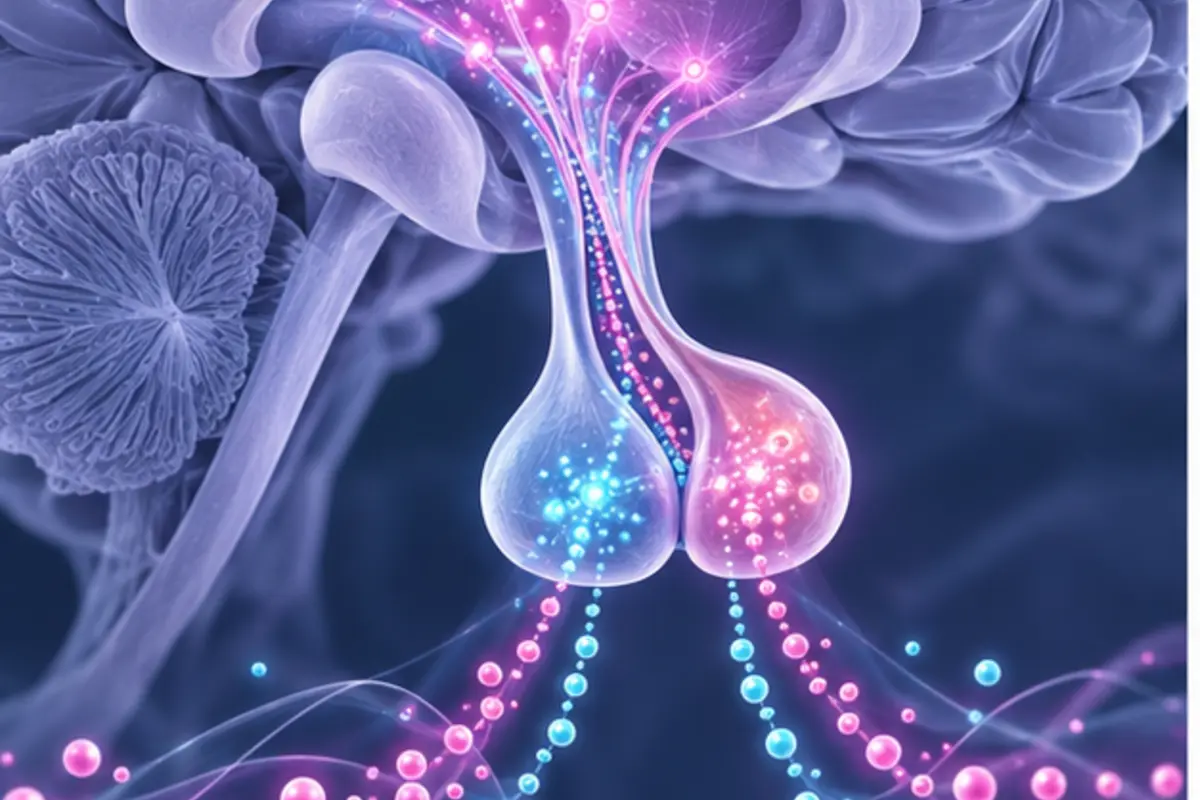
Kisspeptin-10 can stimulate pituitary gonadotropins through upstream GnRH signalling.
WHAT THE RESEARCH SAYS
Human bolus and infusion studies report rapid LH responses, with sex- and cycle-dependent differences.
Evidence so farStrong human mechanistic evidence
Endogenous testosterone signalling
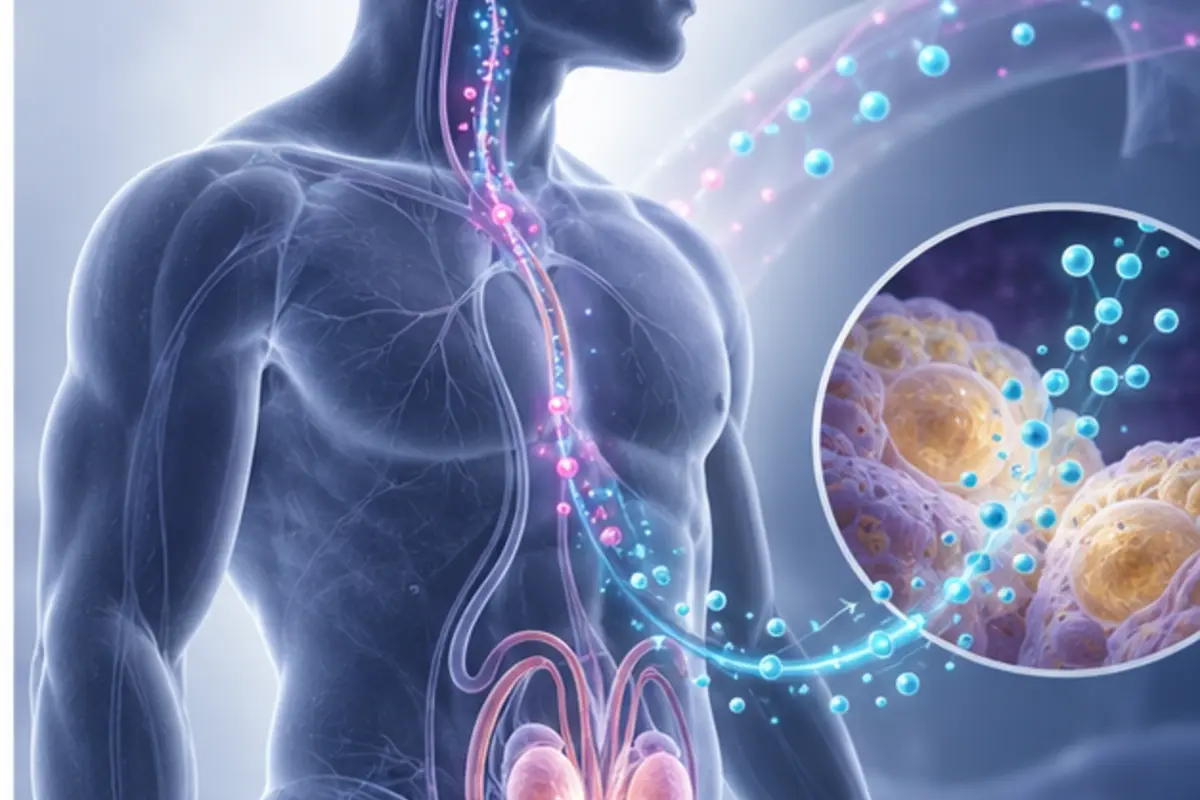
Men's-health interest focuses on stimulating the body's own reproductive axis.
WHAT THE RESEARCH SAYS
Small proof-of-concept studies reported increased LH and testosterone during infusion.
Evidence so farEarly human evidence
Fertility
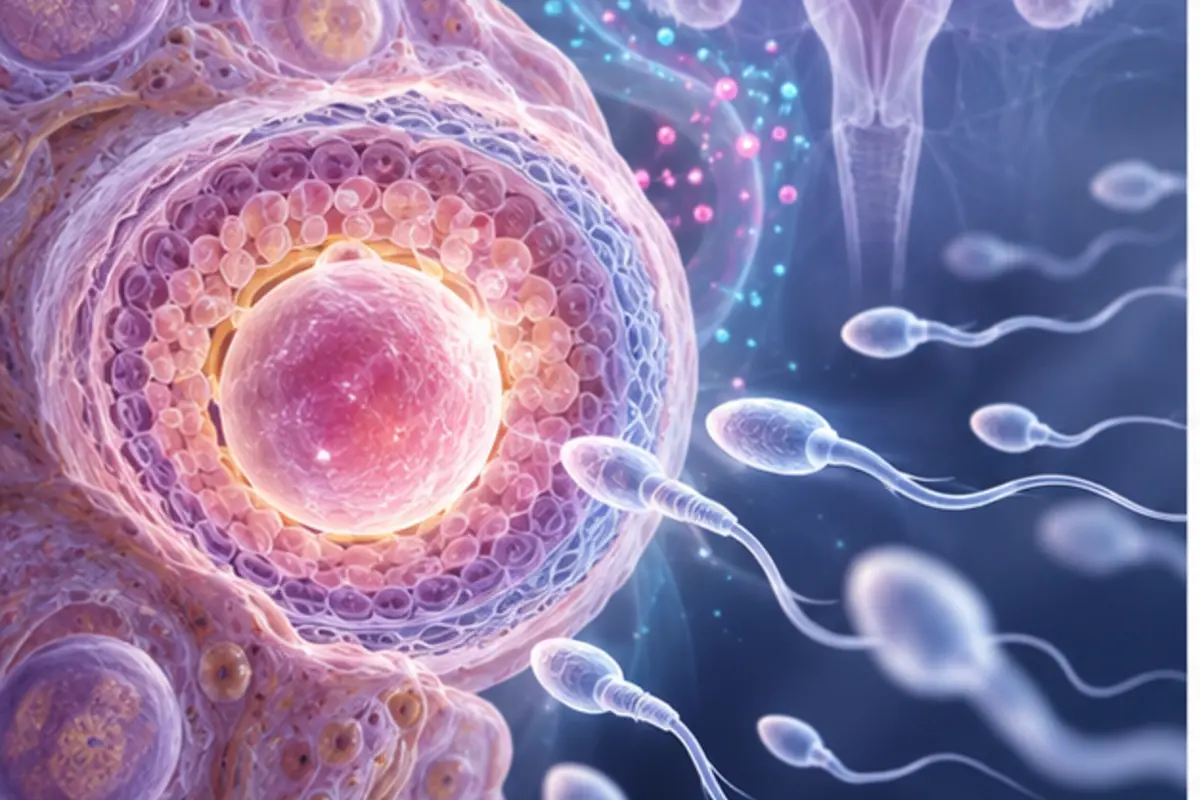
Fertility is one of the clearest areas of human research, including studies looking at egg maturation and hormone responses in assisted reproduction.
WHAT THE RESEARCH SAYS
Human research explores hormone release and assisted-reproduction applications, but many studies use kisspeptin-54 or longer-acting agonists rather than kisspeptin-10.
Evidence so farGrowing peptide-family evidence
Sexual-function research
Libido interest follows newer kisspeptin-54 trials and broader reproductive signalling.
WHAT THE RESEARCH SAYS
Those sexual-desire findings should not be automatically attributed to kisspeptin-10.
Evidence so farRelated-peptide human evidence
Interest first. Evidence next.We start with why people are talking about Kisspeptin-10, then show what the research actually supports so you can see the full picture.
HOW TO READ THE RESEARCH STORY
A clear acute hormone signal before an unproven treatment claim
Kisspeptin-10 can activate the reproductive axis in people. The boundary lies between that measured short-term physiology and durable fertility, testosterone or sexual-wellbeing outcomes.
An upstream reproductive signal with rapid, measurable human effects
Kisspeptin-10 activates KISS1R above GnRH, LH and FSH. Monitored human studies show acute dose-related hormone responses, but the size and direction of response depend on sex, cycle phase and endocrine state.
01
Upstream signal
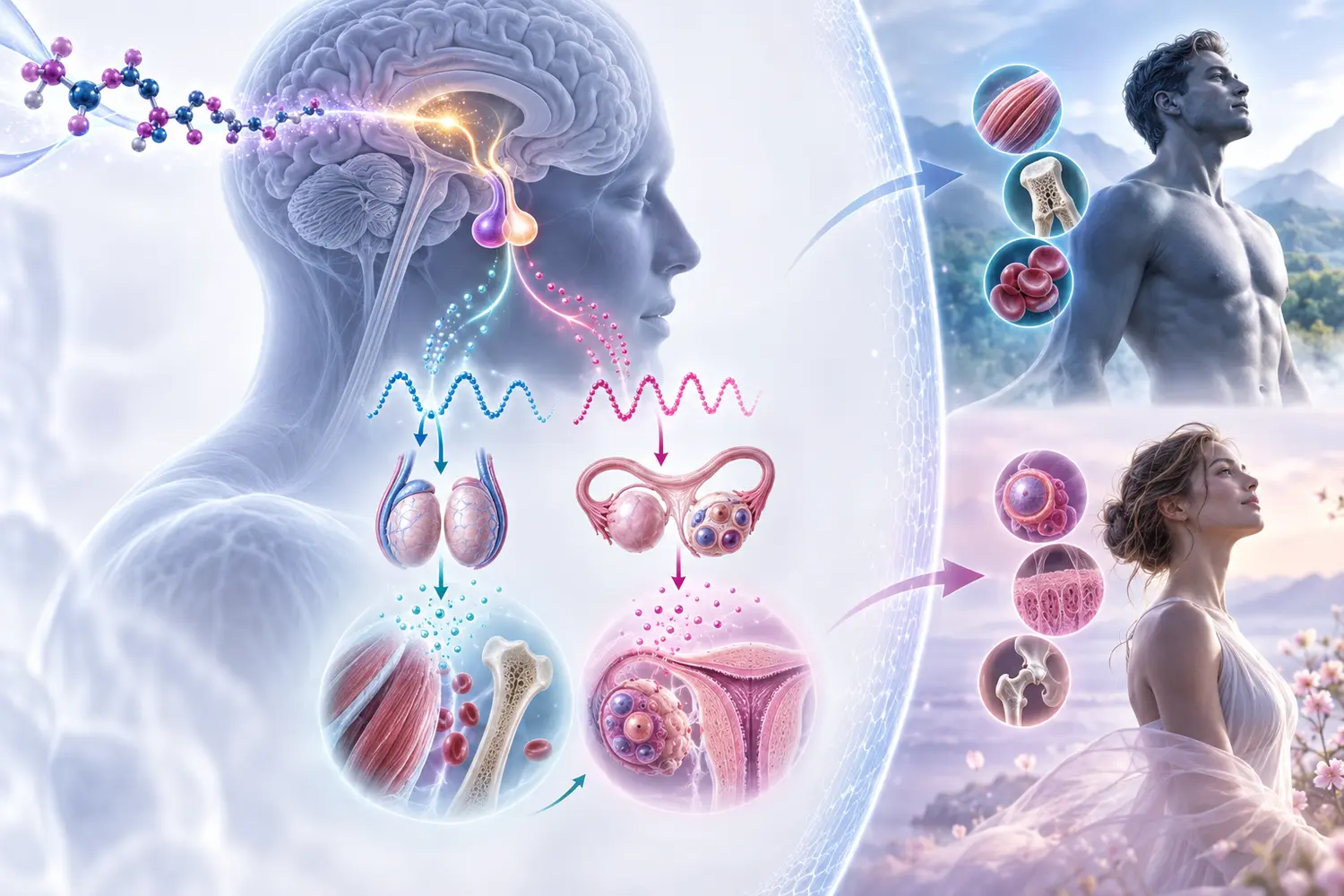
Kisspeptin activates GnRH neurons, which then drive pituitary LH and FSH release.
02
Rapid response
Controlled bolus and infusion studies demonstrate acute gonadotropin responses in people.
03
Biological context
Men and women—and different menstrual-cycle phases—do not respond identically.
04
Treatment boundary
Acute hormone release does not establish a durable fertility, testosterone or libido therapy.
Multiple controlled physiology studies demonstrate acute hormone release in humans.
✓
Clinical efficacyLimited
2/5 evidence depth
Therapeutic fertility, hypogonadism or sexual-function benefits remain investigational.
◇
Safety evidenceDeveloping
3/5 evidence depth
Short infusion studies provide useful safety data; chronic self-administration is not well studied.
⌁
Preclinical evidenceDeveloping
3/5 evidence depth
Extensive reproductive-axis research supports the mechanism.
HOW TO READ THESE SCORESDeveloping preclinical evidence · strong human evidence
These are editorial evidence-depth ratings on a 1–5 scale, not a statistical result or a single scientific formula. They summarise how much relevant evidence is present in each separate category and how mature that evidence is.
Human evidenceHow much direct research in people is available and how developed it is.
Clinical efficacyWhether human studies demonstrate meaningful outcomes for the claims being discussed.
Safety evidenceHow much human safety, tolerability and longer-term follow-up information is available.
Preclinical evidenceThe depth of laboratory and animal research supporting biological plausibility.
Controlled bolus and infusion studies show acute response
Clinical efficacyEarly
No established chronic treatment or self-use protocol
Main gapDuration
Subcutaneous equivalence, desensitisation and outcomes
Keep route, study setting and outcome together
A measured biological response can be valuable evidence without establishing a self-administered protocol or a durable treatment benefit.
From promising signals to human evidencePreclinical research can reveal promising biological signals. Human studies show how far those signals have translated into real-world outcomes.
What people are exploring
PEOPLE & EXPERIENCE
Why people are exploring Kisspeptin-10
LH pulsatility, endogenous testosterone and fertility—mapped against clear acute human physiology and an unproven chronic treatment story.
Community goals · acute human response · duration boundary
Why this matters
Community interest centres on fertility, libido and increasing endogenous testosterone. Acute human hormone responses are real, but longer-term outcomes and practical self-administration remain uncertain.
Experiences can reveal recurring goals, perceived changes and practical questions that formal studies may not yet address. They can suggest what deserves investigation, but cannot isolate the effect of one compound from rehabilitation, time or other changes.
+
⌁WHAT RESEARCH ADDSScientific context
Human and preclinical research helps test whether an idea is biologically plausible, whether it appears in people and how confidently the result can be separated from chance, bias or other parts of recovery.
01Frequently discussed
Frequently discussedPositive interest with important uncertainty
Increasing LH and testosterone
This is the best-supported biological effect in men.
HUMAN EVIDENCE
Bolus and infusion studies show acute LH and testosterone responses.
A plausible concern, without a validated community cycle or break interval.
◇
Experience can start the question. Research has to test it.
Community reports can surface patterns worth exploring. Controlled human research is what tests whether those patterns are reliable, clinically meaningful and attributable toKisspeptin-10, while the available studies show how far that question has already been answered.
Dose & duration
DOSE & DURATION
See the numbers in their proper context
Compare published study protocols with the patterns people discuss in the community. The two are intentionally kept separate so an anecdotal routine is never mistaken for clinical guidance.
Research protocols · community patterns · calculator tools
Research dose ≠ recommendation. A dose used in a study describes that study only and does not establish an appropriate dose for an individual outside the research setting.
ONE ANECDOTAL COMMUNITY EXAMPLE
An intermittent community pattern beyond the IV evidence
This example reflects discussion of subcutaneous Kisspeptin-10. Published human physiology studies used measured IV boluses or monitored infusions with frequent hormone sampling.
ANECDOTAL · UNVALIDATED
1Week 1
50 mcg · 2–3 times
Anecdotal subcutaneous starting pattern
2Week 2
50–100 mcg · 2–3 times
Optional community-described step-up
3Weeks 3–4
Up to 200 mcg per use
Upper end of recurring descriptions
4After course
Pause & review
No validated desensitisation-prevention interval
What people commonly discuss50–200 mcg per subcutaneous use, several times weekly for a short 2–4-week course, appears in community protocol summaries.
What remains unvalidatedSubcutaneous bioavailability, chronic endocrine outcomes, escalation, fertility benefit and the proposed break are not validated.
◎
ROUTE & DELIVERYThe published numbers are intravenous and weight-based
Human studies tested 0.01–3.0 mcg/kg IV boluses and 1.5–4 mcg/kg/hour infusions. They do not establish an equivalent flat subcutaneous amount.
PROFESSIONAL SOURCE CONTEXT
The source shows what has actually been studied. It does not validate the community example above or turn it into guidance.
Human kisspeptin-10 studies use tightly controlled bolus or infusion protocols; they do not establish a self-administered fertility or testosterone regimen.
The very small proof-of-concept study cannot define a treatment dose, course or long-term benefit.
↗
HOW TO READ THE STEP-UPThe start and target come from the published protocol.
The visual shows the opening amount, target amount and total study window. It does not invent intermediate steps: the linked paper or authorised product information remains the source for the complete escalation schedule.
COMMUNITY DISCUSSION
What people commonly discuss
Anecdotal / unvalidated · extrapolated from acute IV physiology
STARTING APPROACHES
Community descriptions often begin around 50–100 mcg subcutaneously, sometimes increasing toward 200 mcg. Human IV data do not validate that conversion.
DURATION / CYCLES
Intermittent use or short 2–4-week courses are discussed to limit continuous receptor stimulation.
MAINTENANCE DISCUSSION
No validated subcutaneous titration, maintenance or break schedule exists for fertility, testosterone or libido goals.
Community patterns are anecdotal and unvalidated unless a linked human study independently supports the same approach.
Often combined with
OFTEN COMBINED WITH
Why people explore pairings with Kisspeptin-10
See the thinking behind community-named stacks, the different role each component is proposed to play, and how much of that idea has actually been tested as a combination.
Community rationale · component roles · evidence boundary
Potential first, evidence in context. Pairings are usually explored because their research stories appear complementary. That makes them interesting to study, but does not yet prove extra benefit or safety.
CURRENT COMPOUNDKisspeptin-10
→
OFTEN EXPLORED WITHKisspeptin-10 + fertility treatment
Kisspeptin-10 + Specialist fertility care
→
OFTEN EXPLORED WITHKisspeptin-10 + testosterone-focused care
Kisspeptin-10 + Endocrine assessment
→
OFTEN EXPLORED WITHKisspeptin-10 + hCG
Kisspeptin-10 + Human chorionic gonadotropin
Combination-specific human research is the strongest evidence for what a pairing adds. Evidence for either ingredient alone should not be silently transferred to the combination.
KKISSPEPTIN-10 IS USUALLY DISCUSSED AROUNDUpstream GnRH, LH and FSH activation
Acute hormone responses are well demonstrated, while durable fertility or testosterone outcomes are not established.
+
PTHE PAIRED APPROACH MAY ADDSpecialist fertility care or an endocrine assessment pathway
A measured diagnosis, sex, cycle phase and treatment goal are more important than adding a second hormone-active compound.
Ovulation, spermatogenesis, libido and low testosterone are not interchangeable outcomes.
02Do not stack by pathway alone
hCG, GnRH analogues and sex hormones can alter the same axis in different ways.
03Use laboratory context
LH, FSH, testosterone or estradiol need timing and clinical interpretation, not isolated snapshots.
Safety context
◇
SAFETY & UNCERTAINTY
Hormonal response depends on sex, timing and endocrine state
01ENCOURAGING CONTEXTAcute human endocrine effects are reproducible
Controlled studies show that Kisspeptin-10 can rapidly alter LH, FSH and downstream sex-hormone signalling.
02THE IMPORTANT BOUNDARYResponse depends on biological context
Sex, menstrual phase, baseline endocrine state and exposure pattern materially change the response.
03WHAT REMAINS UNKNOWNChronic self-administration
Subcutaneous equivalence, sustained fertility outcomes, desensitisation risk and long-term safety are not established.
What the current evidence saysKisspeptin-10 can alter LH, FSH and testosterone rapidly. Repeated exposure may change responsiveness, while effects in pregnancy, hormone-sensitive disease and unsupervised combinations require particular caution.
01 · OBSERVEDPublished safety findings
The summary above reflects the human or preclinical evidence currently represented on this profile.
02 · UNCERTAINGaps still matter
Limited follow-up, small studies or absent controlled trials can leave uncommon and longer-term risks unresolved.
03 · CONTEXTProduct and regulatory status
Route, product identity, quality and regulatory status can materially change the safety context; see the linked status sources below.
PREGNANCY & FERTILITYSpecialist context is essential
Manipulating the reproductive axis may affect ovulation, pregnancy planning and assisted-reproduction treatment.
HORMONE-SENSITIVE CONDITIONSDiscuss relevant history
Hormone-sensitive cancers, pituitary disease and unexplained reproductive symptoms change the risk assessment.
MONITORINGA single hormone result can mislead
LH, FSH, testosterone and estradiol vary with timing and physiology and need clinical interpretation.